Upright membrane that stops rhizome crossing a line.
Free photo ID check · Mon–Fri 8am–6pm, Sat mornings

A root barrier is heavy-duty membrane fixed upright in a dug trench along a boundary or around a structure. It makes sense when the stand sits on the other side of a fence and cannot be reached from your land, or when new work needs protecting. The membrane blocks the rhizome, but the stand itself still needs treating.
A barrier is most useful when the stand is on the other side of a boundary and you want to protect your garden, or when a stand cannot be removed straight away. It works best along a defined line such as a fence, wall or drive edge. It is less helpful where roots already lie on both sides. The surveyor checks the line, the likely depth and any obstacles before quoting.
A trench is dug along the agreed line, usually deeper than ordinary garden digging goes, and the heavy-duty sheet is set upright with joints overlapped and sealed. The top edge sits slightly above ground and the soil is replaced. Tree roots, old foundations, drains and buried rubble often get in the way and can slow the job. Gardens built on made ground may need extra digging to find a clean line.
Check along the line each season for canes appearing on your side or pushing over the top. Do not dig up or tear the membrane when planting or fixing fence posts. Keep paving and soil levels from covering the exposed edge. A barrier is often paired with treatment on the knotweed side if the owner agrees. Keep the plan, photographs and installation record, since a buyer may ask to see them.
A leaf and a stem will do, via the contact form or message. Free of charge.
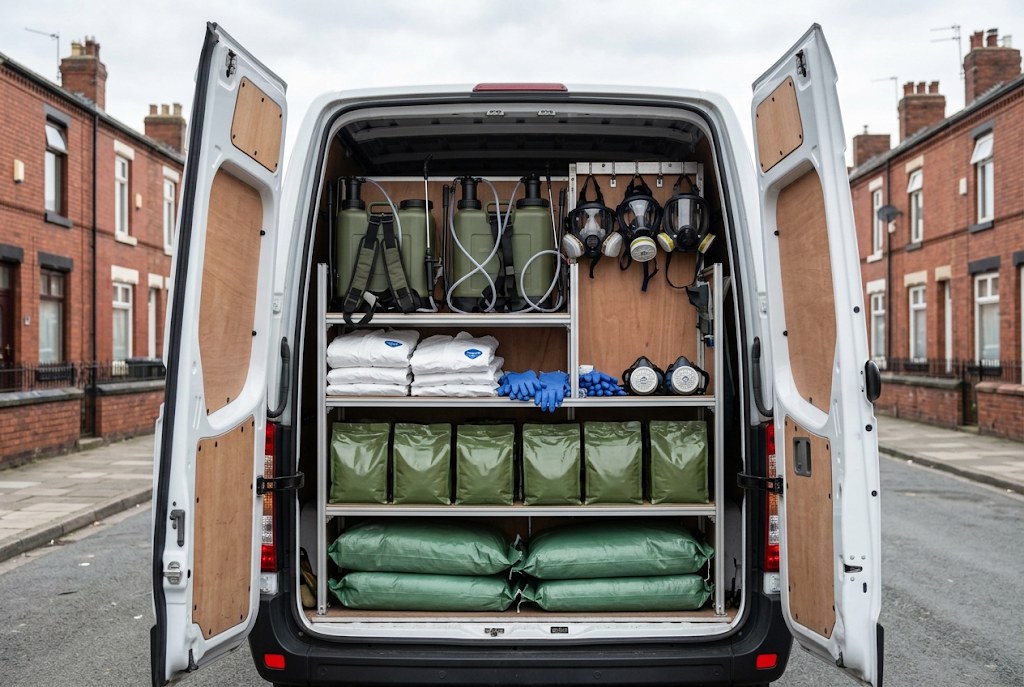
For a confirmed stand we visit, measure it and record what lies near it.
Seasonal spraying over several years, or digging out where the timetable demands it.
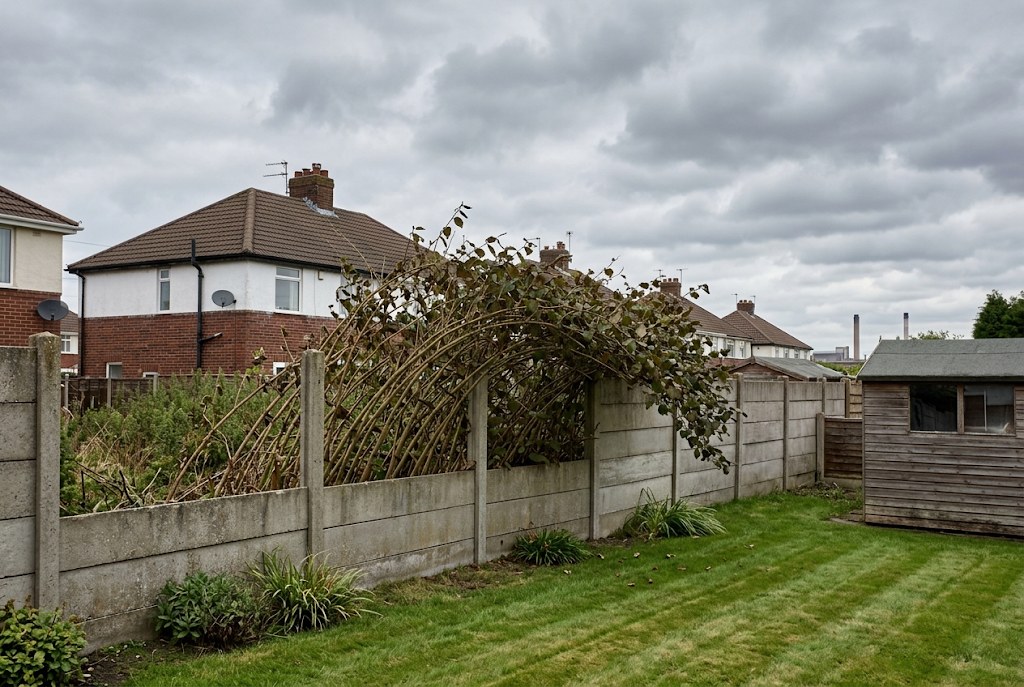
A written plan for you and your lender, and revisits until the stand stops regrowing.
Every job starts with a free photo check. If a visit is needed, you get a written quote before any work starts — no obligation, no surprises.
Ditton· Appleton· Halebank· Cronton· Upton Rocks· Lunts Heath· Hough Green· Victoria Park· West Bank· Simms Cross
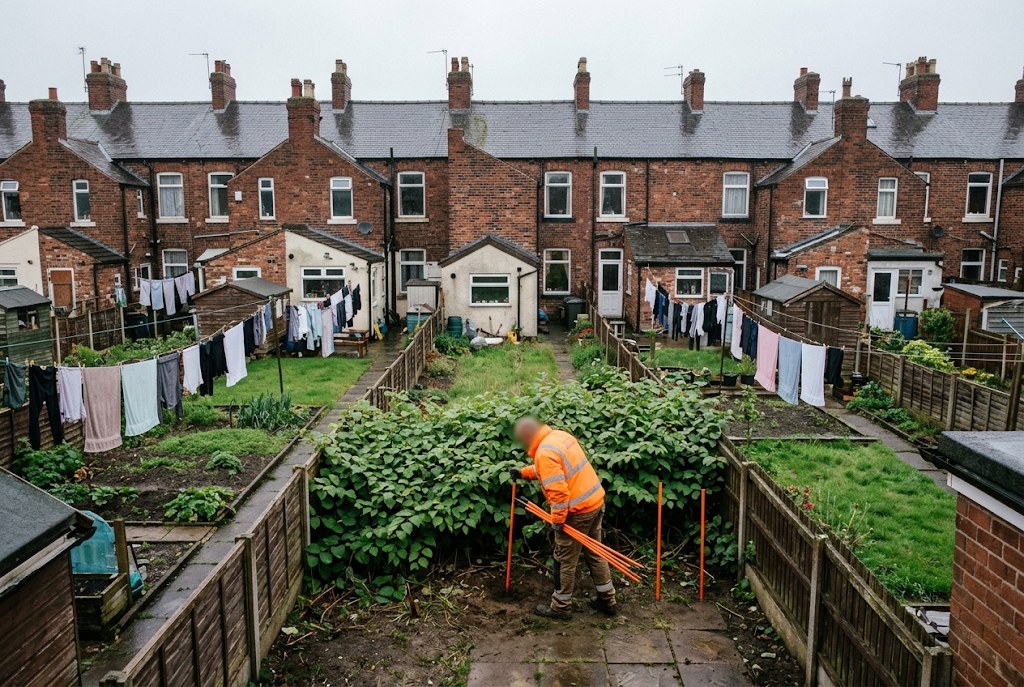 Knotweed survey An on-site visit to confirm the plant and record the stand.
 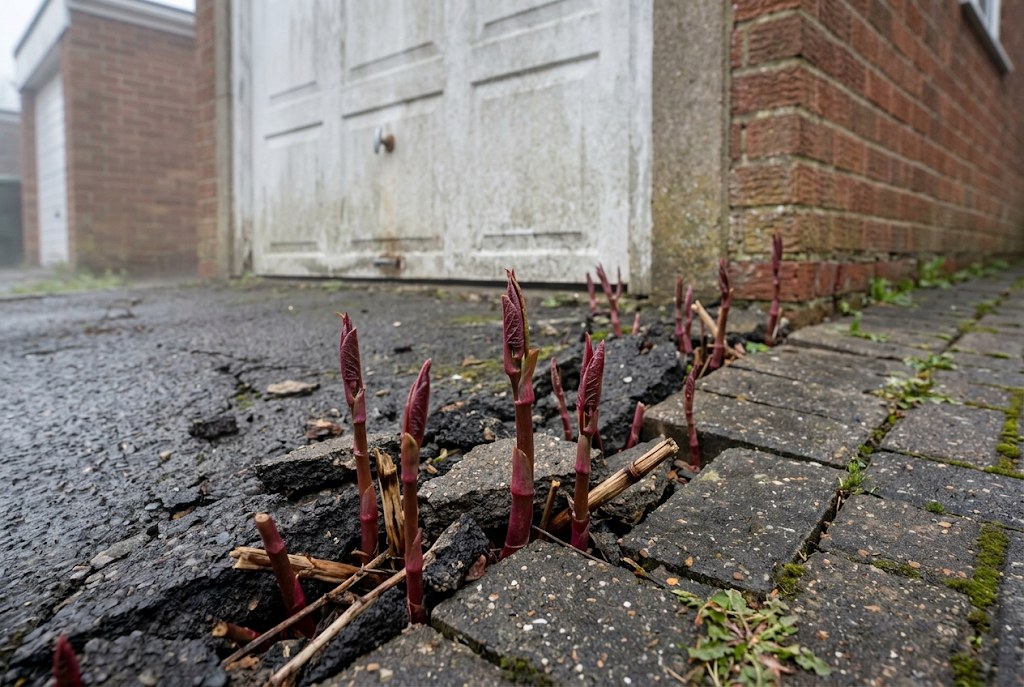 Free knotweed ID from a photo Message us a picture and we say what the plant is, at no cost. Knotweed plan for mortgages and sales The management plan a lender or buyer will ask for. Knotweed from a neighbour A dated record of where it is and where it is heading. Knotweed spraying programme Herbicide treatment over several seasons, with return visits. Knotweed excavation Digging out the stand and its rhizome in a few days.
  Knotweed on building plots Surveys and removal for Widnes development land. Knotweed for landlords Surveys and treatment for rented houses and flats.